Healthcare is changing quickly, and technology is playing a big role in this change. One of the most important digital tools used in healthcare today is EMR software for clinics and hospitals, also known as Electronic Medical Record (EMR) software.EMR systems enable doctors and healthcare staff to store and manage patient information digitally, eliminating the need for paper files.
In recent years, many healthcare organizations have moved to cloud-based EMR software. Platforms like Healcard Cloud-Based EMR are helping clinics and hospitals manage records easily and securely, making it one of the examples of cloud EMR for healthcare. This type of EMR makes healthcare work easier, faster, and more efficient. In this blog, we will explain what cloud-based EMR software is, how it works, and its benefits.
What Is Cloud-Based EMR Software?
EMR stands for Electronic Medical Records. It is a digital version of a patient’s medical file that includes personal details, medical history, diagnoses, prescriptions, lab reports, and treatment notes.
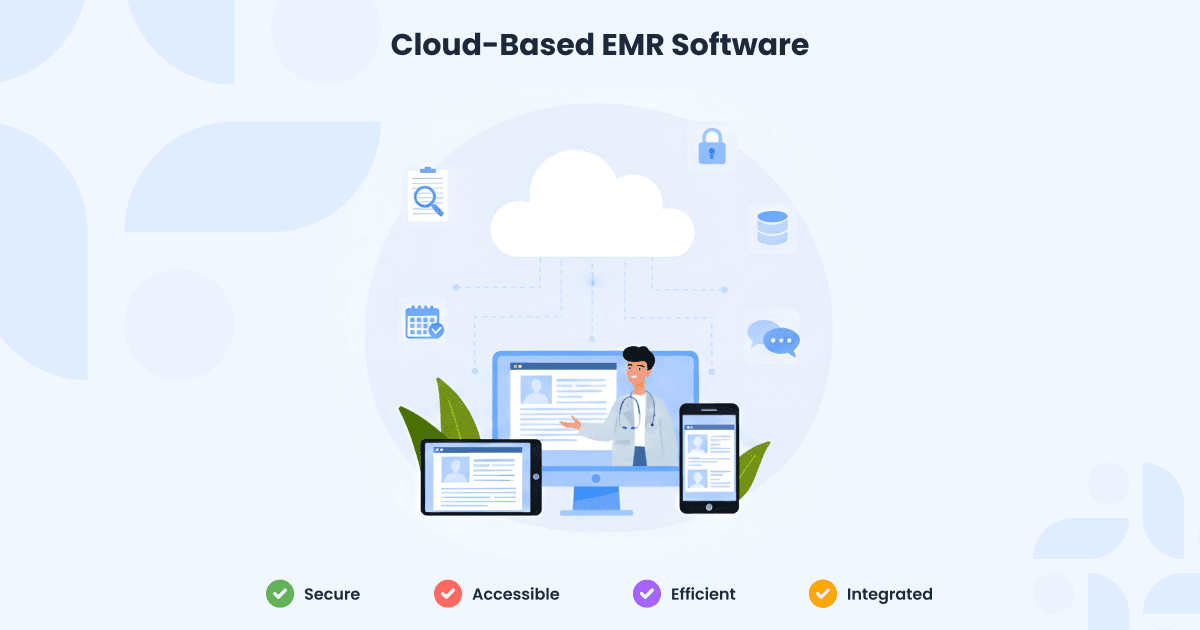
Cloud-based EMR software means that all this data is stored securely on online servers (the cloud), making it a reliable cloud EMR for healthcare providers of all sizes. instead of on a computer or server inside the hospital or clinic. Doctors and staff can access the system using the internet, from anywhere and on any device.
Why Healthcare Is Moving to the Cloud
Healthcare is moving to the cloud because it makes work easier and less stressful. Doctors and staff can quickly see patient records from anywhere, whether they are in the hospital, another clinic, or doing online consultations.
Keeping physical servers is expensive and risky. If there is a power cut or system problem, work can stop. Cloud systems are safer, more reliable, and highlight the real cloud EMR benefits that help hospitals run smoothly every day.
Key Benefits of Cloud-Based EMR Software
These cloud EMR benefits help healthcare providers deliver faster, safer, and more efficient care.
Easy Access Anytime, Anywhere
With cloud-based EMR software, doctors can access patient records from anywhere, whether they are in the clinic, hospital, at home, or handling an emergency. This is very helpful for hospitals and clinics that have multiple branches or visiting doctors. Important patient information is always available when it is needed most.
Lower Costs and No Heavy Infrastructure
Cloud EMR does not require costly servers, hardware, or a full-time IT team. Most systems work on a monthly or yearly subscription. This reduces the initial investment and makes it affordable for small clinics, startups, and growing hospitals. You only pay for what you use.
Better Data Security and Automatic Backup
Cloud EMR systems are built with strong security features like data encryption, password protection, and role-based access. Patient data is automatically backed up on secure servers. Even if a damaged or crashes, all patient records remain safe and can be restored easily.
Automatic Updates and New Features
Cloud EMR software updates automatically. New features, improvements, and security updates are added in the background. You always use the latest version without manual installation or interruption to your daily work.
Eco-Friendly and Paperless
Cloud EMR reduces the need for paper files, saving space and helping the environment. Digital records are easier to search, share, and organize, making everyday work faster and simpler.
Better Patient Experience
With quick access to medical history, lab results, and prescriptions, patients get faster care and smoother appointments. It helps doctors provide more accurate and timely treatment.
Scales Easily as Your Practice Grows
Cloud EMR can grow with your practice. Whether you are a small clinic or a large multi-specialty hospital, you can add more users, departments, or branches without changing the system. This makes it very flexible for the future.
Common Use Cases of Cloud-Based EMR Software
Clinics and Small Practices: Cloud-based EMR helps small clinics keep all patient information in one place, making it ideal EMR software for clinics and hospitals of any size. Doctors can easily manage OPD records, write prescriptions, track follow-ups, and check patient history. This reduces paperwork and saves a lot of time.
Multi-Specialty Hospitals: In hospitals, cloud EMR connects all departments like OPD, IPD, billing, pharmacy, and lab. Every department can see the same updated patient data, which improves coordination and avoids confusion.
Telemedicine and Online Consultations: For online consultations, doctors can quickly access patient records from anywhere. They can review past treatments, add notes, and update prescriptions without visiting the clinic.
Diagnostic Centers and Laboratories: Diagnostic centers can upload lab reports directly into the EMR system. These reports are instantly available to doctors and patients, reducing delays and manual mistakes.
Chain Clinics and Multi-Location Healthcare Groups: Cloud EMR allows all clinic branches to work on a single system. Management can easily monitor operations, view reports, and control everything from one central location.
Key Features to Look for in Cloud-Based EMR Software
- Patient Records Management: All patient details, like medical history, prescriptions, reports, and visit notes, should be stored in one place, as done in Healcard EMR, one of the best cloud EMR software options available today.
- E-Prescriptions: Doctors should be able to create and send prescriptions digitally. This reduces handwriting errors and makes prescriptions clear for both patients and pharmacies
- Appointment Scheduling: The software should allow easy booking, rescheduling, and tracking of appointments. This helps manage patient flow and saves time for clinic staff
- Lab and Diagnostic Integration: The EMR should connect with lab systems so that test results are added directly to the patient record. This avoids paperwork and speeds up diagnosis.
- Billing and Reporting: A good EMR system should help create bills, manage payments, and generate reports. This keeps financial work simple and organized.
- Data Security and Access Control: Patient data must be safe. The software should protect information and allow access only to authorized doctors and staff.
Cloud-Based EMR vs Traditional On-Premise EMR
| Point | Cloud-Based EMR | Traditional On-Premise EMR |
| Installation | No big setup needed. Just log in and start using. | Needs local servers and hardware inside the clinic or hospital. |
| Cost | Lower starting cost. Pay monthly or yearly. | High initial cost for servers, software, and setup. |
| Maintenance | The company takes care of everything. | The clinic or hospital must manage maintenance and repairs. |
| Accessibility | Can be accessed anytime, anywhere. | Use it only inside the clinic or hospital. |
| Data Backup | Data is saved automatically and safely. | Data backup must be done manually. |
| Security | Strong security, encryption, and regular updates. | Security depends on local systems and staff. |
| Updates | Updates happen automatically. | Updates need manual work. |
| Growth | Easy to add new users or features. | Hard and costly to upgrade. |
How to Choose the Right Cloud-Based EMR
- Understand your needs and goals: First, think about what your clinic or hospital really needs. Consider the number of doctors, staff, and patients, and what features will make daily work easier.
- Look for strong security: Patient data is very sensitive. Make sure the EMR has strong security features like data encryption, secure logins, and regular backups to keep information safe.
- Check if it is easy to use: The system should be simple and user-friendly. Doctors and staff should be able to learn and use it without much training or confusion.
- Compare pricing clearly: Check monthly or yearly costs and see what features are included. Pick a plan that fits your budget without hidden charges.
- Ask for a demo or free trial: Trying the system before buying helps you understand if it is the right fit for your team.
- Check integration with other tools: The EMR should easily connect with labs, pharmacies, billing, and other healthcare tools.
- Look for good customer support: Problems can happen at any time. Reliable support helps you solve issues quickly without disturbing your work.
Is Cloud-Based EMR Right for Your Healthcare Practice?
If you want to reduce paperwork and make daily work easier, a cloud-based EMR is a good option. It helps you store patient records online, so doctors and staff can find information quickly without searching through files.
You can access patient data anytime and from anywhere, which also makes online consultations and telemedicine simple. As your clinic or hospital expands, the system can grow with you with minimal effort.
Cloud-based EMR works well for small clinics, diagnostic centers, hospitals, and large healthcare groups. Healcard Cloud-Based EMR is a simple and smart way to manage healthcare records and be ready for the future.
FAQs: Cloud-Based EMR Software
Cloud-based EMR software is a digital system that stores patient medical records on secure online servers instead of on local computers. Doctors and staff can access patient data anytime using the internet.
Traditional EMR is installed on local servers inside a clinic or hospital, while cloud-based EMR runs online. Cloud EMR is easier to access, costs less to maintain, and updates automatically.
Yes, cloud-based EMR works well for hospitals, multi-specialty centers, and chain clinics because it supports multiple users, departments, and locations on one system.
You should look for patient record management, e-prescriptions, appointment scheduling, lab integration, billing, reporting, and strong data security.
Yes, cloud-based EMR is very helpful for telemedicine. Doctors can view patient history, update records, and write prescriptions during online consultations.
Yes, cloud EMR systems are scalable. You can easily add more users, services, or branches as your clinic or hospital grows.
Most cloud-based EMR systems charge monthly or yearly fees. The cost depends on the number of users and features, making it affordable for clinics and hospitals.
Conclusion
Cloud-based EMR software helps clinics and hospitals manage patient records easily without using paper files. Doctors and staff can quickly find patient information from anywhere, which saves time and improves care.
It is affordable, secure, and grows with your practice, making it one of the strongest cloud EMR benefits for modern healthcare providers. Solutions like Healcard make this process simple by providing an easy-to-use and reliable cloud EMR, helping healthcare providers focus more on treating patients and less on paperwork.
📲 Try a free demo of Healcard today. Manage your clinic digitally, securely, and effortlessly.
📧 Email: support@healcard.com
🌐 Website: healcard.com
✨ Make your clinic & hospital smarter with Healcard!