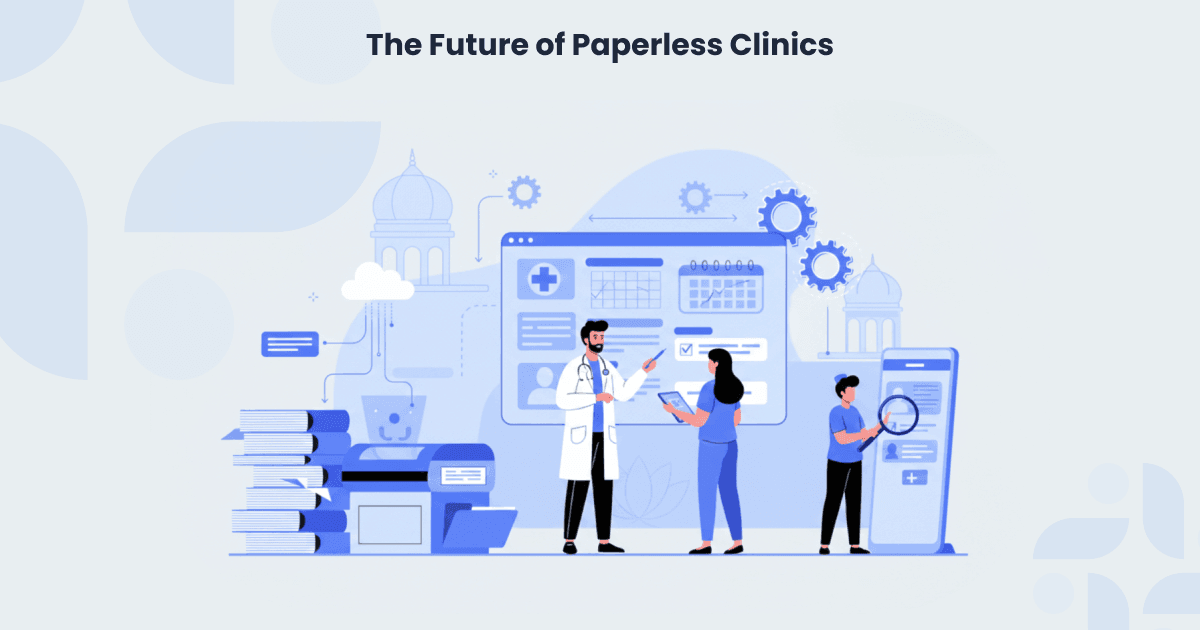
Healthcare in India is changing fast. Clinics today handle a large number of patients daily, along with prescriptions, reports, bills, and follow-ups. In many clinics, this work is still done using paper files, registers, and handwritten notes. While this system worked in the past, it is now becoming slow, confusing, and difficult to manage.
This is why more clinics in India are moving towards paperless and digital clinics. A paperless clinic utilises digital tools to manage patient records, prescriptions, billing, and daily operations, making paperless healthcare possible without the need for paper-based records. Modern clinic platforms, such as Healcard, are helping doctors make this shift smoothly without disrupting their daily practice. Let us explore why paperless clinics in India are poised to become the future of healthcare.
What Is a Paperless Clinic?
A paperless clinic is a digital clinic where most of the work is done digitally instead of on paper. Patient details, medical history, prescriptions, bills, and reports are stored safely in a computer or cloud system.
This does not mean that the paper is completely removed. It means minimum use of paper and maximum use of digital systems. Compared to traditional clinics, paperless clinics are faster, more organised, and easier to manage.
How Clinics in India Operate Today
Many clinics in India still work using paper files and manual registers. This creates several daily problems for doctors and staff:
- Patient files can get lost or damaged
- Finding old records takes a lot of time
- Handwritten prescriptions are sometimes difficult to read
- Manual billing mistakes can happen easily
- Patients often face long waiting times
As the number of patients increases, managing everything on paper becomes tiring, stressful, and inefficient for doctors and clinic staff.
Why Paperless Clinics Are Becoming Popular
Clinics are slowly moving away from paper files and adopting paperless clinic systems, and there are some very simple reasons for this change:
- More patients every year: Clinics are seeing more patients daily, and managing paper files for everyone has become difficult and time-consuming.
- Doctors want to save time: Doctors prefer spending more time with patients instead of writing notes, searching files, or doing paperwork.
- Easy access to the internet and smartphones: Today, most doctors and patients use smartphones and the internet, making digital systems easy to use and understand.
- Patients expect quick service: Patients want fast registration, quick bills, and easy access to their reports and prescriptions.
- Government support for digital healthcare: The Indian government is encouraging clinics and hospitals to go digital through various digital health initiatives.
Because of all these reasons, many clinics are choosing paperless systems to work faster, better, and smarter.
Key Features of a Paperless Clinic
Digital patient registration
In a paperless clinic system for small clinics, patient details like name, age, phone number, and medical history are entered only once. The information is saved safely and can be used again for future visits, saving time and avoiding repeated form-filling.
Electronic Medical Records (EMR)
All past medical history, test reports, diagnoses, and treatment details are stored digitally. Doctors can quickly view previous records anytime, which helps in better and more accurate treatment.
Digital prescriptions
Prescriptions are generated digitally, so they are clear, readable, and error-free. Patients can easily receive them on their phone or WhatsApp, and there is no confusion caused by handwritten notes.
Online appointment scheduling
Patients can book appointments in advance. This reduces crowding in the clinic, controls waiting time, and helps doctors manage their schedule better.
Digital billing and invoices
Bills and invoices are created automatically. This reduces calculation mistakes, speeds up the billing process, and keeps financial records well organised.
Digital consent forms and medical certificates
Consent forms, medical certificates, and other documents can be generated quickly and stored safely. There is no risk of losing important papers, and records can be accessed whenever needed.
Cloud storage and data backup
All patient records are stored securely on the cloud. Even if a computer or device stops working, data remains safe and can be recovered easily.
Easy access from anywhere
Doctors can access patient records from the clinic, home, or even while travelling. This is especially helpful in emergencies or for follow-up consultations.
Role of Technology in Paperless Clinics
Technology is the main support system of paperless clinics and healthcare. It helps clinics move away from files, registers, and handwritten work, making daily operations easier and faster.
- Clinic management software: helps doctors and staff manage patient records, appointments, billing, and prescriptions in one place. Information can be found quickly, which saves time and reduces errors.
- Mobile apps and tablets: allow doctors to update patient details, write digital prescriptions, and check reports anytime. This makes work smooth, especially in busy clinics.
- Cloud-based systems: store data safely online, so patient records can be accessed from anywhere and are protected from loss or damage.
- AI-powered tools: help clinics work smarter by supporting diagnosis, managing data, and reducing repetitive work.
These technologies can also connect clinics with labs, pharmacies, and diagnostic centres, making healthcare faster and more efficient for everyone.
Government Support for Digital Clinics in India
The Indian government is encouraging digital clinics and paperless healthcare to make medical services easier and faster. Some of the key steps include:
- Ayushman Bharat Digital Mission (ABDM): A program to connect hospitals, doctors, and patients digitally.
- ABHA Health ID for Patients: Every patient can get a unique digital health ID to store and access their medical records safely.
- Telemedicine and E-Hospital Platforms: Patients can consult doctors online and access hospital services from home.
- Digital Prescriptions and e-Medical Records: Now legally accepted, so clinics can move away from paper files and work more efficiently.
Platforms like Healcard align well with these initiatives, helping clinics stay compliant and future-ready.
How Clinics Can Go Paperless, Step by Step
Going paperless doesn’t mean changing everything at once, especially for small clinics adopting a paperless clinic system. Clinics can do it gradually:
- Start with digital patient registration: Let patients fill out their details on a tablet or online instead of paper forms.
- Use digital billing and invoices: Send bills and receipts electronically to save time and paper.
- Introduce digital prescriptions: Doctors can write prescriptions on a computer or app instead of on paper.
- Train your staff step by step: Teach your team how to use digital tools slowly, don’t rush them.
- Secure patient data: Make sure all digital records are safe with proper security systems.
- Educate patients about digital records: Let patients know how digital records work and how they can access them.
Even small steps can make a big difference over time. Going paperless is a journey, not a race.
Future Trends in Paperless Clinics
The future of paperless clinics in India is very exciting. Clinics are moving towards fully digital systems, and some upcoming trends include:
- AI-based treatment support: Computers and AI will help doctors make better decisions for patient care.
- Voice-based prescriptions: Doctors can give prescriptions just by speaking, saving time and reducing errors.
- Automated follow-up reminders: Patients will get reminders automatically for their next visits or tests.
- Smart analytics for clinic growth: Clinics can use data to understand what’s working and improve their services.
- Fully connected digital healthcare: All parts of healthcare, from lab tests to patient records, will be linked digitally.
With platforms like Healcard, clinics can stay ahead of these trends and deliver faster, smarter, and more patient-friendly care.
FAQ: Paperless Clinics
A paperless clinic uses computers and digital systems instead of paper files to manage patient records, prescriptions, bills, and appointments.
Yes. Digital prescriptions, medical records, and online billing are legal and supported by the Indian government.
Yes, small clinics and solo doctors can easily go paperless. Many clinic management platforms are affordable and easy to use. Clinics can start slowly with digital registration and billing and expand step by step.
No, doctors do not need advanced technical knowledge. Healcard digital clinic systems are designed to be simple and user-friendly. With basic training, doctors and clinic staff can use them comfortably.
Paperless clinics will use AI, voice prescriptions, and smart digital tools to provide better and faster care.
Yes, modern paperless clinic systems can integrate with labs, pharmacies, and diagnostic centres. This allows reports, prescriptions, and billing to be shared digitally, saving time for both doctors and patients.
Patients get faster service, clear prescriptions, easy access to reports, and shorter waiting times.
Conclusion
Paperless clinics are slowly becoming a part of everyday healthcare in India. Using digital records, prescriptions, and billing helps clinics work in a faster and more organised way. Doctors can spend more time with patients instead of managing paperwork, and patients get quicker and smoother service.
Clinics do not need to change everything at once. Starting with small digital steps is enough. With easy-to-use platforms like Healcard, going paperless becomes simple and stress-free. Paperless clinics are not just the future; they are a better way to run clinics in India.
Ready to Simplify Your Clinics?
Discover Healcard, the all-in-one EMR & Scheduling App trusted by doctors and clinics.
📲 Try a free demo of Healcard today. Manage your clinic digitally, securely, and effortlessly.
📧 Email: support@healcard.com
🌐 Website: healcard.com